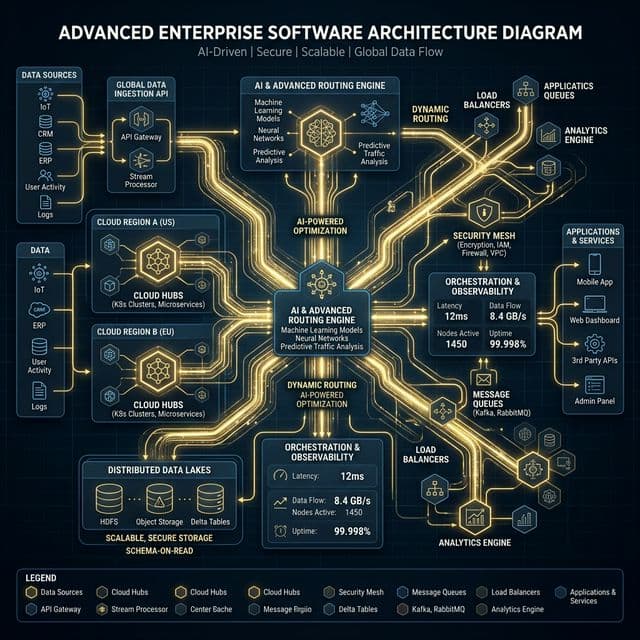
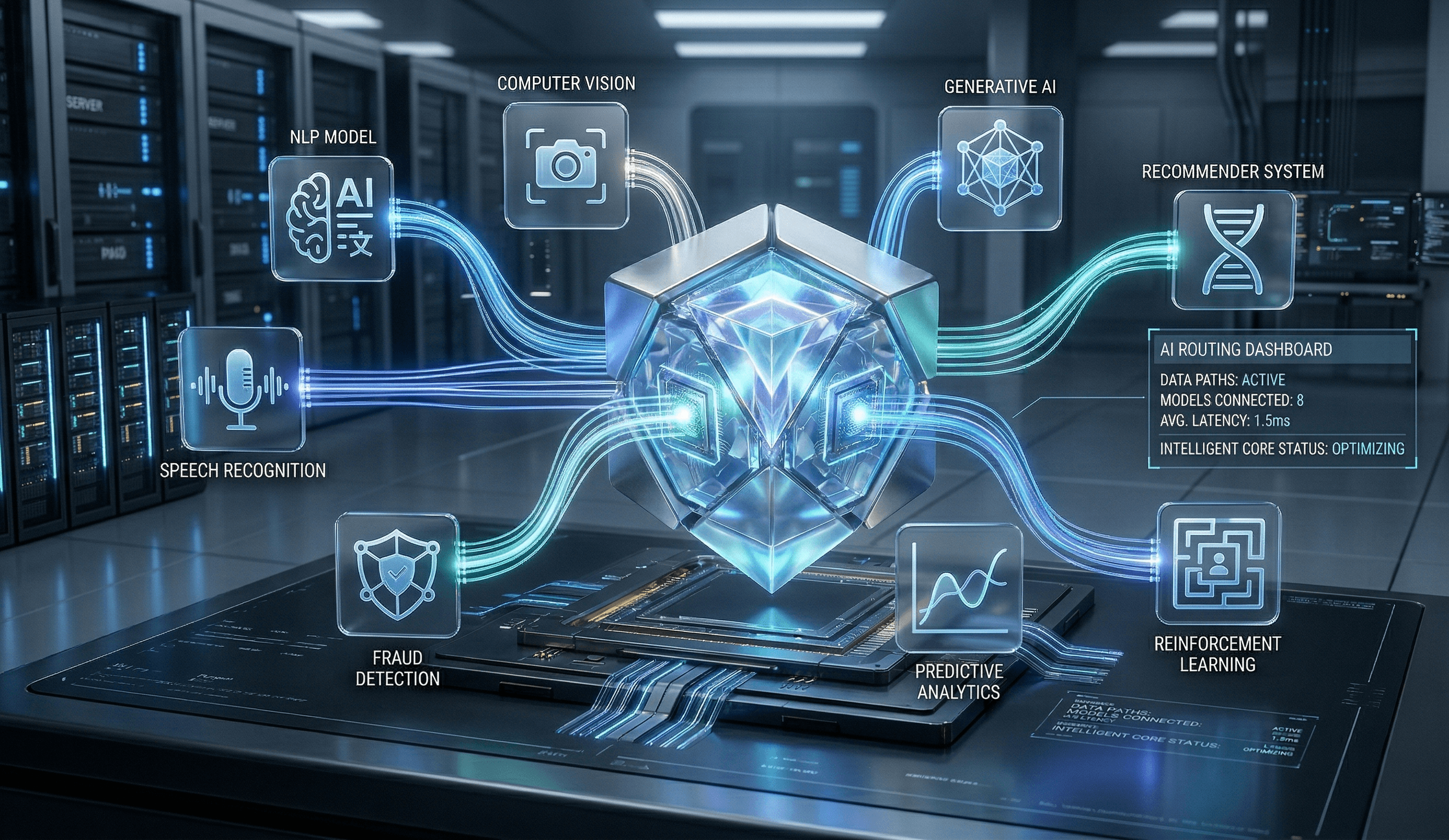
Enterprise AI Architecture
FI Digital Enterprise Architecture

The Right Model for the
Right Problem

Model-agnostic AI architecture that uses Claude for reasoning, GPT-4o for vision, Gemini for real-time operations. Multi-cloud deployment across AWS and Azure.

Model Agnostic AI Approach

Model-Agnostic Philosophy

Most AI consultancies are model-married: they commit to a single foundation model and fit every problem to that model's strengths. This creates misalignment. If your primary model is excellent at vision tasks but weak at reasoning, you're incentivised to force-fit reasoning problems onto a vision model. The result is suboptimal solutions.

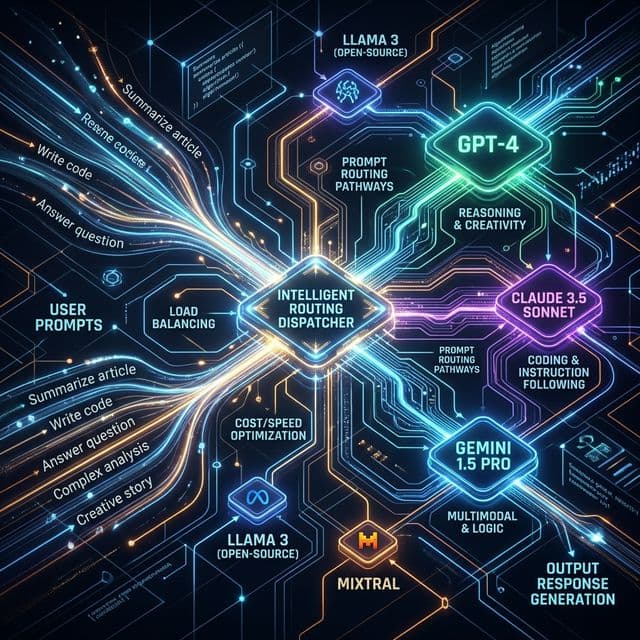
We adopt a model-agnostic philosophy: we choose the best model for each problem, regardless of vendor. For document analysis, legal reasoning, and complex compliance decisions, Claude (from Anthropic) is the superior choice. Claude's 200,000-token context window, extended reasoning capability, and explainability are unmatched.

For real-time operations requiring rapid decision-making and constraint satisfaction (dispatch, warehouse optimisation, production scheduling), Google Gemini delivers superior performance because of its training on structured data and multi-step reasoning under time constraints.

For vision tasks (document scanning, damage assessment, quality inspection), GPT-4o (Microsoft's deployment of OpenAI's model) is strongest because of its superior image understanding and recent improvements in spatial reasoning.

For cost-sensitive applications where latent understanding is acceptable, we use open-source models like Llama 3 or Mistral, deployed via Replicate or your own infrastructure. This model diversity requires more sophisticated orchestration, but it delivers measurably better outcomes.

A client using our approach gets a legal AI system powered by Claude, a logistics AI system powered by Gemini, and an inspection AI system powered by GPT-4o—because each model is genuinely optimal for its task. This hedges risk against vendor price hikes or API downtime.

AWS Bedrock & Azure OpenAI: Dual UK Cloud

Your data must remain in UK sovereign cloud infrastructure, with no ambiguity about data residency, data governance, or where processing occurs. We offer two primary deployment architectures, both of which ensure UK data residency.
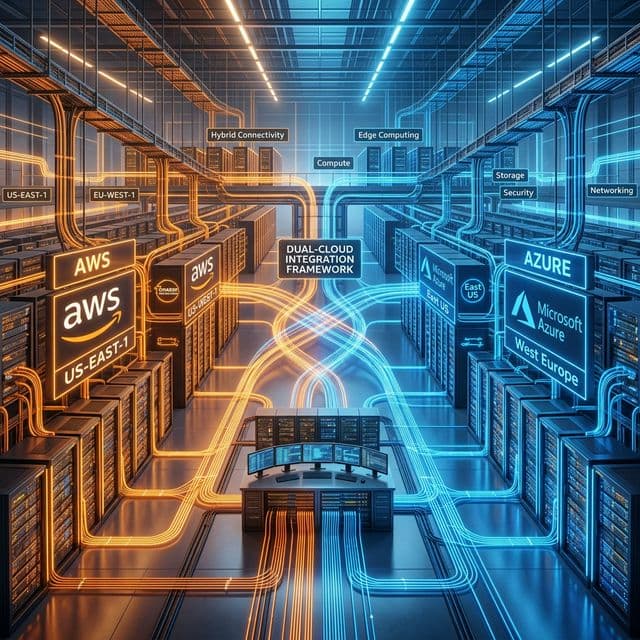
AWS Bedrock (available in eu-west-2, London) provides managed access to Claude without requiring direct API calls to Anthropic's infrastructure. Your requests flow through AWS's data centres; data residency is guaranteed. We use Bedrock when deploying Claude for financial services, legal work, and sensitive applications because AWS's SoC 2 compliance and GDPR certifications provide regulatory reassurance.

Azure OpenAI UK South (available in London) provides managed access to GPT-4o and other OpenAI models. Your requests remain on Microsoft's UK infrastructure; data does not leave the UK and is not used for model training. Firms with existing Azure commitments (Microsoft Dynamics, Teams, Power Platform) achieve seamless integration.

Both deployments support enterprise requirements: dedicated throughput, higher rate limits, SLA guarantees, and direct support. You can also adopt a hybrid model (Claude via AWS, GPT-4o via Azure) orchestrated through a common API gateway like n8n, giving your teams a unified platform.

Dual Cloud Deployment
Automated CI/CD AI Pipeline

Infrastructure-as-Code & CI/CD

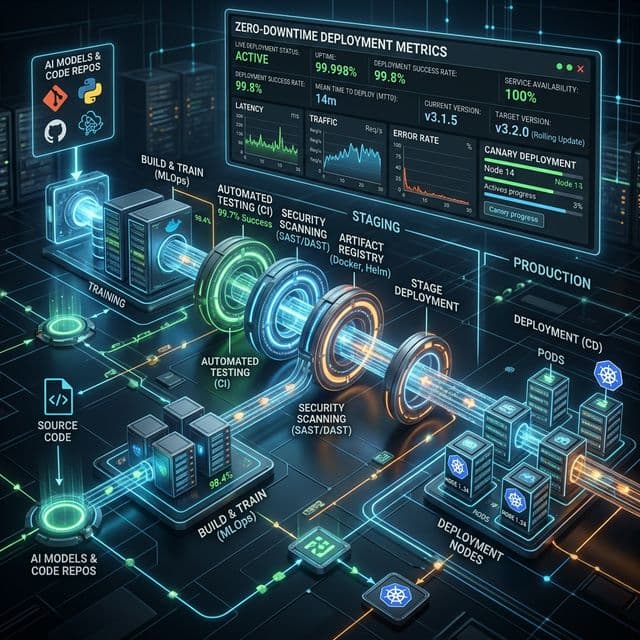
Your AI systems must be reproducible, versioned, and automatically deployed—just like your application code. We enforce infrastructure-as-code (IaC) practices across all deployments.

Every AI system is defined in code (Terraform for cloud infrastructure, Kubernetes manifests for container deployment), version-controlled in Git, and auditable. When a new AI model version is available, we update the code, run comprehensive tests, and deploy only after validation. There's no manual server configuration, no snowflake deployments, and no tribal knowledge.

When you commit changes (model updates, prompt refinement), the pipeline automatically runs unit tests, executes regression tests against historical data, evaluates model performance on a test dataset, deploys to staging, runs smoke tests, and (with human approval) deploys to production.

If a new model causes a regression or unexpected output, we automatically rollback to the previous version. This level of rigor is standard in application development but uncommon in AI systems. We apply it universally to ensure tracebility and reliability.

Monitoring & Observability for AI

Traditional application monitoring (CPU, memory, latency, error rates) is necessary but insufficient for AI systems. AI systems can silently degrade—models can produce consistently wrong answers, drift in capability, or exhibit unexpected bias—without triggering traditional alerts. We implement comprehensive AI observability.
Every AI inference is logged with: input, output, confidence score, model version, latency, cost, and human feedback (if available). This data is aggregated into dashboards that track: model performance over time, error patterns, cost trends, and latency distribution.

When performance degrades (accuracy drops, confidence decreases, error rates increase), alerts trigger automatically. When model output begins drifting from expected patterns, we detect it. When latency increases unexpectedly (indicating computational bottlenecks), we're alerted.

Observability includes human feedback loops. When humans correct an AI decision, override a recommendation, or flag an error, that feedback is captured and analysed. If a large percentage of humans are overriding a particular type of decision, that indicates the model is weak on that decision type. We use that signal to retrain the model or adjust confidence thresholds.

For regulated industries (financial services, legal), observability is essential for regulatory conversations. When the FCA or SRA asks how your AI system performed last month, you have comprehensive data: accuracy metrics, error logs, human override patterns, and performance trends. You can answer with confidence.

AI Observability Dashboard
Deep Security Architecture

Security Practices

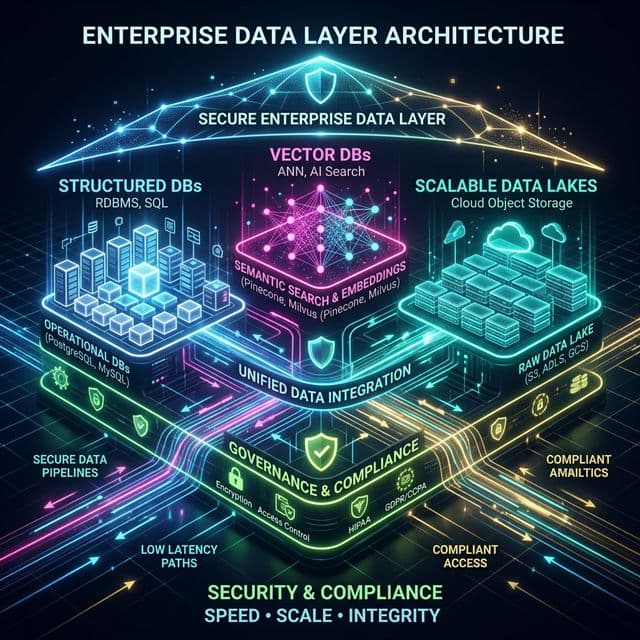
AI systems handle sensitive data—customer records, financial information, legal documents, health information. Security practices must be comprehensive and embedded into architecture. We implement defence-in-depth security. Data in transit is encrypted using TLS 1.3. Data at rest is encrypted using AES-256.

Access to AI systems is authenticated and authorised: users authenticate via SSO (Okta, Azure AD, or other enterprise providers); fine-grained authorisation ensures users can only access systems they're permitted to use; all access is logged and auditable. API keys and credentials are managed through secure vaults (AWS Secrets Manager, Azure Key Vault, or HashiCorp Vault), never hardcoded or checked into version control.

AI model outputs are reviewed before being returned to users—sensitive data in model outputs (PII, confidential information) is masked or redacted. Code and infrastructure are regularly scanned for vulnerabilities. We conduct threat modelling on new systems, identifying potential attack vectors and mitigating them.

We work with your security team to understand your specific requirements and threat model, then tailor controls accordingly. Penetration testing is conducted annually. Incident response procedures are documented and regularly exercised. Security isn't a feature added at the end; it's embedded throughout design and operation.

Common Questions

Find answers to common technical queries regarding our AI implementation, fleet optimization tracking, routing predictability, and system integration.

Still have questions? Talk to an expert

Evaluate Your Stack

Unsure which model is right for your workflow? Let us conduct a 4-week evaluation on your data inside a UK-sovereign environment.

Start AI Discovery Audit