

Your Sales Team Is Drowning in Admin
A modern B2B sales rep spends 40-50% of working time on admin instead of selling. Monday morning: 50 inbound leads land in the inbox—some qualified, most noise. The sales rep manually Googles each one, checks LinkedIn, and hunts for buying signals.
Tuesday: CRM updates, email hunting, formatting lead info. Wednesday: outreach sequencing—who to call first, what's their trigger event, what's the angle.
Result: The rep talks to 6-8 qualified prospects per week. A competitor with an automated lead qualification and outreach system is tracking and talking to 15-20. Conversion rates drop because prospects invariably go cold while you're busy doing manual administrative triage.
Dirty CRMs and Stalled Pipelines
Pipeline accuracy is abysmal—your CRM shows a £2m pipeline, but 40% of it is stalled, wildly unqualified, or duplicated data. The Sales Manager spends Monday morning doing pure data hygiene (deduplicating contacts, deleting old leads, updating job titles) instead of coaching their team.
This isn't a productivity problem; it's a revenue problem.
Every hour your rep spends googling is an hour a prospect sits unqualified. The Sales agent decisively solves this by continuously researching leads, dynamically qualifying them, rapidly running outreach sequences, and monitoring pipeline health—24/7.
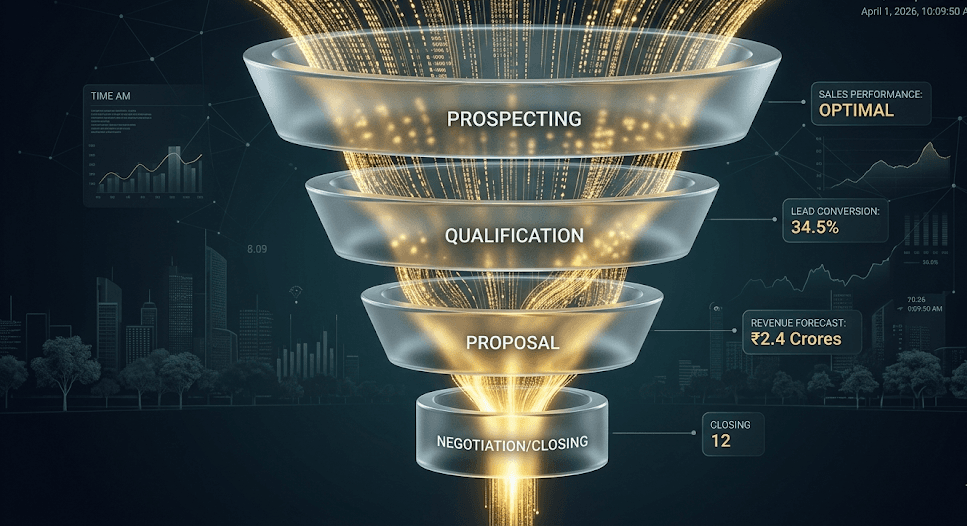
Meet Your Sales Digital Worker
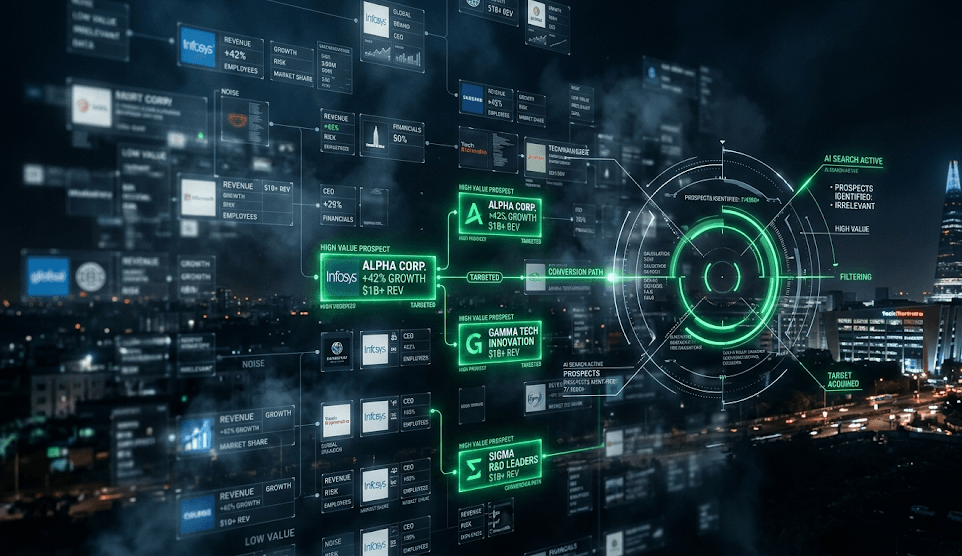
Autonomous Lead Qualification
Your Sales agent works while you sleep. An inbound lead arrives via your website form, LinkedIn, or an imported list.
Step 1: Enrichment. It deeply researches the company (Crunchbase, LinkedIn, Companies House), the individual (tenure, recent activity), and pulling firmographic data (revenue, funding, tech stack). It flags buying signals like leadership changes or hiring sprees—all within 90 seconds.
Step 2: Qualification. Claude reads the research plus your precise sales playbook and scores the lead 0-100. The agent auto-assigns high-scoring leads (80+) directly to specific reps while simultaneously routing low-scoring metrics into a passive nurture sequence. This alone eliminates 30% of manual qualify/disqualify admin overnight.
Intelligent Outreach Sequencing
Step 3: Outreach Sequence. For high-scoring leads, the agent meticulously crafts a personalised multi-touch sequence.
Your first email isn't generic; it's a warm introduction mentioning their specific trigger (e.g., funding or rapid scaling). Email 2 follows three days later with a hyper-focused case study from a peer company in their specific sector. Next, an automated LinkedIn invitation incorporates a targeted value hook before a final 7-day last-touch conversational offer via email.
A Sales rep manually sending similar sequences might touch 8-12 prospects a week. Your digital agent rigorously touches 80-120 qualified prospects a week, logging every touch securely.


Total Pipeline Visibility
Step 4: CRM Sync. All research, engagement scores, and outreach parameters automatically update your underlying databases—Zoho CRM, Salesforce, HubSpot, or Pipedrive.
Step 5: Pipeline Intelligence. The agent aggressively monitors your entire active pipeline. Deal hasn't moved in 14 days? An automated email pings the rep with context detailing the stall and recommending a nudge strategy. Deals decaying over 60 days flag immediately for critical win/loss analysis.
Result: reps focus on closing conversations, not executing admin. Your pipeline stays rigorously clean because the overarching agent manages the weekly hygiene and compliance loops without friction constraints.
How It Works: The Orchestration
Data Enrichment via Trigger Architectures
The Sales agent relies on an advanced n8n orchestration loop utilizing Claude for tactical copywriting and GPT-4o for complex entity research. Trigger: a lead arrives natively via web form or direct Apollo/LinkedIn API pushes.
Step 1: Data Enrichment. The agent instantly queries Crunchbase arrays for hard revenue and technical tech stacks. Simultaneously, third-party LinkedIn enrichment hooks locate recent departmental hires, crossing referenced UK Companies House metrics in under 60 seconds.
Step 2: AI Qualification. Claude reads the aggregate JSON configuration—matching specific targets like 'ideal company size' and 'buying triggers'. It then assigns a detailed probability score directly back to your team.


Copywriting & Multi-Touch Flow
Step 3: Tactical Copywriting. If a score exceeds 75, Claude writes extremely personalized bodies: "Congrats—Acme's growing fast by adding 3 cloud engineers."
These concise, highly personalized hooks routinely benchmark 35-40% open rates across our integrations compared to generic industry spam.
Step 4: Orchestration. The node sequences space these texts deliberately (Day 1, Day 3, Day 7). Wait commands isolate behaviors—if your prospect clicks a provided pricing link or downloads a case study attachment, the agent's sequence pauses cleanly, prompting the human representative to aggressively pursue the now warmly activated lead directly.
Step 5: CRM Update. All data—company research, lead score, email content, send times, open rates, click rates—flows into your CRM (Zoho CRM, Salesforce, HubSpot, Pipedrive) via native connectors or REST APIs. Your rep sees a pre-researched lead with a clear next action. The entire loop, end-to-end, takes 90 seconds. Manual process: 12-15 minutes per lead. Efficiency gain: 95% faster, same or better quality.
Business Outcomes: Revenue Impact in Numbers
20-35%
Leads that go through automated qualification and research see a 20-35% higher conversion rate than manually qualified leads. Why? Because your rep knows the lead is real, the company is a fit, and the trigger is fresh. Less time wasted on dead-end conversations.
<2 Min
Average time from inbound lead to first touch drops from 4-6 hours (manual) to <2 minutes (agent). Early response matters in B2B—HubSpot data shows response time under 5 minutes increases conversion by 30%. Your agent ensures you're first, always.
60-80
A rep freed from 15-18 hours per week of manual admin can take 60-80 additional qualified conversations per month. At average conversion rates and deal values, that's an additional £225k-£1m per month in pipeline for a single rep.
85-90%
Your CRM stops being a fiction novel. Stalled deals get identified within 2-3 days, not discovered at month-end. Your forecast improves because you have robust qualitative visibility. Teams report forecast accuracy improving from 65-70% up to 85-90%.
25-40%
A £50k lead generation budget (ads, events, tools) goes structurally further because more leads are actually qualified and rigorously worked on time. Consequently, your entire macro cost per newly qualified opportunity drops by 25-40% year-over-year.
3-4 Mo
A new sales rep typically takes 6 months to build pipeline and product knowledge. With the agent autonomously providing enriched leads and clear playbooks, ramp time drops cleanly to 3-4 months. New reps are productive by week 3, not month 6.
Integration Ecosystem: Your Entire Sales Stack Connected
Supported Ecosystems






Your Entire Sales Stack Connected
CRM Integration: The agent connects to Zoho CRM (native n8n connector, 1-day setup), Salesforce (REST API, 2-3 days), HubSpot (3 days), Pipedrive (1-2 days), or Copper (1 day). Your team keeps their existing CRM; the agent autonomously feeds data into it.
Lead Source Integration: Leads come strictly from your website form (via webhook), LinkedIn Sales Navigator (via third-party sync), Apollo (API integration), Hunter.io (API), or a bulk upload (CSV directly to agent processing).
Enrichment Data: Crunchbase, LinkedIn, Companies House, Clearbit, or RocketReach APIs forcefully feed company and personal intelligence data. You choose your robust data sources; we seamlessly integrate them.
Multi-channel Feedback Environments
Multi-channel Outreach: Email sends via your email service provider (Gmail, Office 365, Zoho Mail, or HubSpot). LinkedIn messages go via third-party API (via approved partners like PhantomBuster or Leonardo). SMS goes via Twilio. Phone transcripts can be ingested for deal notes.
Engagement Tracking: Email open/click tracking, LinkedIn profile visits, website session data—all distinct actions feed back immediately into the agent to constantly refine individual lead scores real-time.
Feedback Loop: As deals close, the agent learns which trigger signals correlated with wins (e.g., "companies that hired 3+ engineers in Q1 close 40% faster"). Over time, lead scores become hyper-accurate for your specific business logic.

Case Study: B2B SaaS Company, 5-Rep Sales Team

£1.8m ARR SaaS Ecosystem
Client: UK-based SaaS company (15 staff, £1.8m ARR, 5-rep sales team, £50k/month in lead gen spend, 12% conversion rate).
Challenge: Leads arrived daily; reps spent 40+ hours/week on manual research and CRM admin. Average time to first touch: 6-8 hours. Pipeline felt bloated—lots of activity, but conversion rate wasn't improving.
Outcome: We deployed a Sales Agent integrated with Salesforce and LinkedIn Sales Navigator. The agent enriches all inbound leads, scores them, auto-assigns high-scoring leads, and runs outreach sequences continuously.
£1.7m Additional Pipeline Generated
Results:Time to first touch dropped from 6-8 hours to <2 minutes. Lead quality filtering improved—reps now spend time on 75+ scored leads only. Conversion rate improved from 12% to 17% (not because reps are better, but because they're talking to better-fit prospects faster).
Scaling Output: Rep outreach capacity increased from 8-12 conversations/week to 18-22 conversations/week (because they're not doing manual research). Pipeline grew from £2.1m to £3.8m in 3 months—not from more leads, but from faster movement and lower churn. Win rate for "auto-qualified" leads (60+) is 28%; manual leads averaged 18%.
ROI Metrics: Total investment: £24,000 (12-week build). Ongoing retainer: £1,200/month. Payback: 2.3 months. Benefit: additional £1.7m pipeline, 5% higher conversion rate, improved forecast accuracy. Annual benefit: £1.2m+ additional revenue.

Frequently Asked Questions
Explore More Solutions
Discover how our AI agents are transforming other departments.
Ready to Automate Your Sales Operations?
Integrate intelligent tracking mechanisms to dramatically scale rep communication velocity securely.