
AI Feature vs. AI Product: The Difference That Matters
AI-native web apps, mobile apps, API platforms, internal tools. Full-stack engineering. Concept to production in 14-20 weeks. 200+ engineers, £10M+ projects delivered.
AI Feature vs. AI Product:
The Difference That Matters
An AI feature is a capability you add to existing software. Smart email suggestions in Gmail, predictive text in WhatsApp, fraud detection in Stripe — these are features. They enhance existing products.
An AI productis built from the ground up with AI as the core. Midjourney's image generation, ChatGPT's conversational intelligence, GitHub Copilot's code generation — these products wouldn't exist without AI. AI isn't a feature; it's the entire reason to use the product.
We build AI products. This is different from adding AI to existing systems. When you add an AI feature to legacy software, you're retrofitting intelligence into traditional architecture. When you build an AI product, you design the entire system around AI from day one.
If you're building a product where AI is the core, we're the right partner.
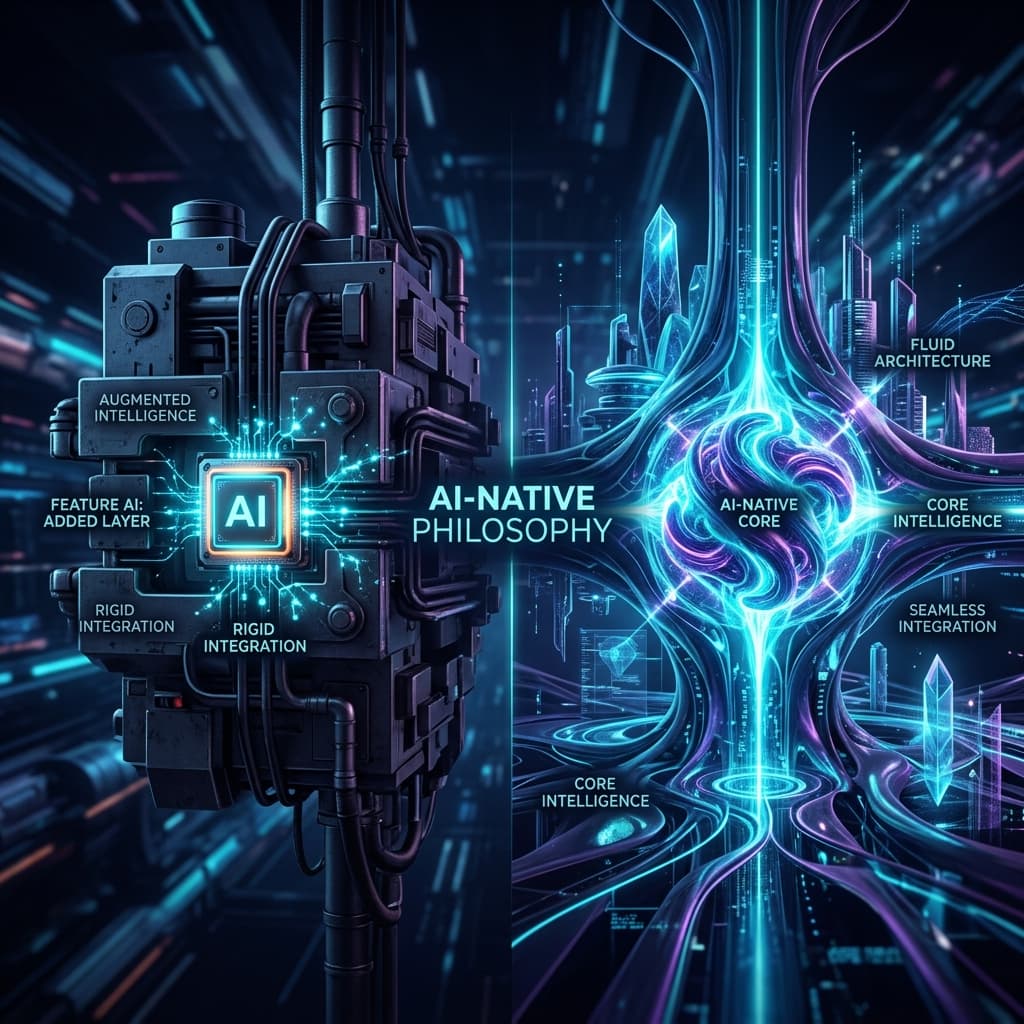
Traditional Products
- Architecture: Built on CRUD and linear business logic
- Performance: Tolerate 1-2s latency (traditional page loads)
- Reliability: Fail catastrophically on system errors
- Data: Relational databases as the primary source of truth
AI-Native Products
- Architecture: Built on loops (Observe, Reason, Learn)
- Performance: Sub-second latency (Copilot-level responsiveness)
- Reliability: Degrade gracefully (simplified results faster)
- Data: Large datasets, interaction data, and learning loops
Our Track Record
We've built 12 AI-native products in the past three years. None of them would work as traditional products; AI is why they exist. Average product: 16-week timeline, £120K-280K development cost, £40K-120K monthly cloud costs, £20K-60K monthly team costs for 2-4 FTE post-launch.
What We Build: Four Types of AI-Native Products
We've built AI products across four categories. Each has different architecture, team composition, timeline, and cost profile.
Type 1: Web Applications
SaaS-style products accessed via browser.
Application Examples
- Compliance document analysis (extract obligations, flag risks)
- Research synthesis (automated paper summaries)
- Transcription & routing (categorise and queue calls)
Type 2: Mobile Applications
Native iOS/Android experiences with mobile-first AI features.
Application Examples
- Personal finance assistant (spending analysis)
- Health tracker (insights from wearable data)
- Professional networking (AI-driven connections)
Type 3: API Platforms
Headless AI intelligence sold via API for other developers to integrate.
Application Examples
- Compliance-as-a-Service
- Content moderation API
- Legal research & search API
Type 4: Internal Tools
Products built to optimize your own organisation's specific workflows.
Application Examples
- Employee onboarding assistant
- Financial deal analysis tool
- Engineering handoff automation
Each type has different considerations. Web apps and mobile apps have consumer UX requirements (design matters). API platforms need robust error handling and documentation. Internal tools prioritise speed-to-value over polish.
Our Build Process: 5 Phases
Building an AI product is 40% architecture, 40% engineering, 20% polish. We follow a specific process developed across 12+ launches.
Phase 1: AI Architecture Sprint
Weeks 1-2Before any product design, we nail the AI architecture. We build prototypes in this phase to prove the AI core works before we build the full product around it.
- Model Selection: Claude for reasoning, GPT-4o for conversation, Gemini for multimodal, or open-source.
- Core AI Loop: Designing how the system observes, reasons, generates, and learns.
- Benchmarking: Testing accuracy, cost, and latency for your specific use case.
- Integration Design: Connecting to data sources, databases, and external APIs.
- Evaluation Framework: Designing how to measure if the AI is 'good enough'.
Phase 2: Product Design
Weeks 2-3Once the AI architecture is proven, we design the product to feel intuitive and responsive.
- User Research: Identifying personas, objectives, and optimal workflows.
- UX/UI Design: Creating wireframes and mockups that highlight AI interactions.
- Feedback Loop Design: Designing how user input explicitly improves the AI model.
- Iteration: Rapid design cycles to ensure perfect alignment with business goals.
Phase 3: Agile Build
Weeks 3-14 typicallyWe build the product using two-week sprints. Every two weeks, you see working software. We demo, you give feedback, we adjust.
- Working Increments: Each sprint produces a functional, testable piece of the system.
- Technical Excellence: Unit tests, integration tests, and automated CI/CD pipelines.
- Transparency: Periodic demos and feedback loops to de-risk development.
- Healthy Codebase: Priority on documentation and tracking technical debt.
Phase 4: AI Evaluation
Weeks final 3-4 of buildParallel to final engineering work, we thoroughly evaluate the AI against real-world scenarios.
- Deep Testing: 200-500 test cases representing complex user scenarios.
- Core Metrics: Measuring accuracy, latency, cost per request, and hallucination rates.
- Edge Case Handling: Stress-testing 'weird' inputs to ensure resilience.
- Performance Tracking: Weekly tests to track and prove continuous quality improvement.
Phase 5: Launch & Hypercare
Weeks final 2-4Phased deployment to ensure total stability and rapid response to real usage.
- Internal Launch: Initial testing by the core internal team to catch edge bugs.
- Beta Access: Controlled launch to 50-100 real users with close monitoring.
- Production Launch: Full public rollout with embedded engineer on-call.
- Refinement: Real-time monitoring and rapid engineering response during the first month.
Typical Delivery Timelines
Compliance Platform: 60 Hours to 4 Hours
How we built an AI-native SaaS that compressed 60+ hours of manual legal review into a 4-minute automated sweep + 3 hours of expert verification.
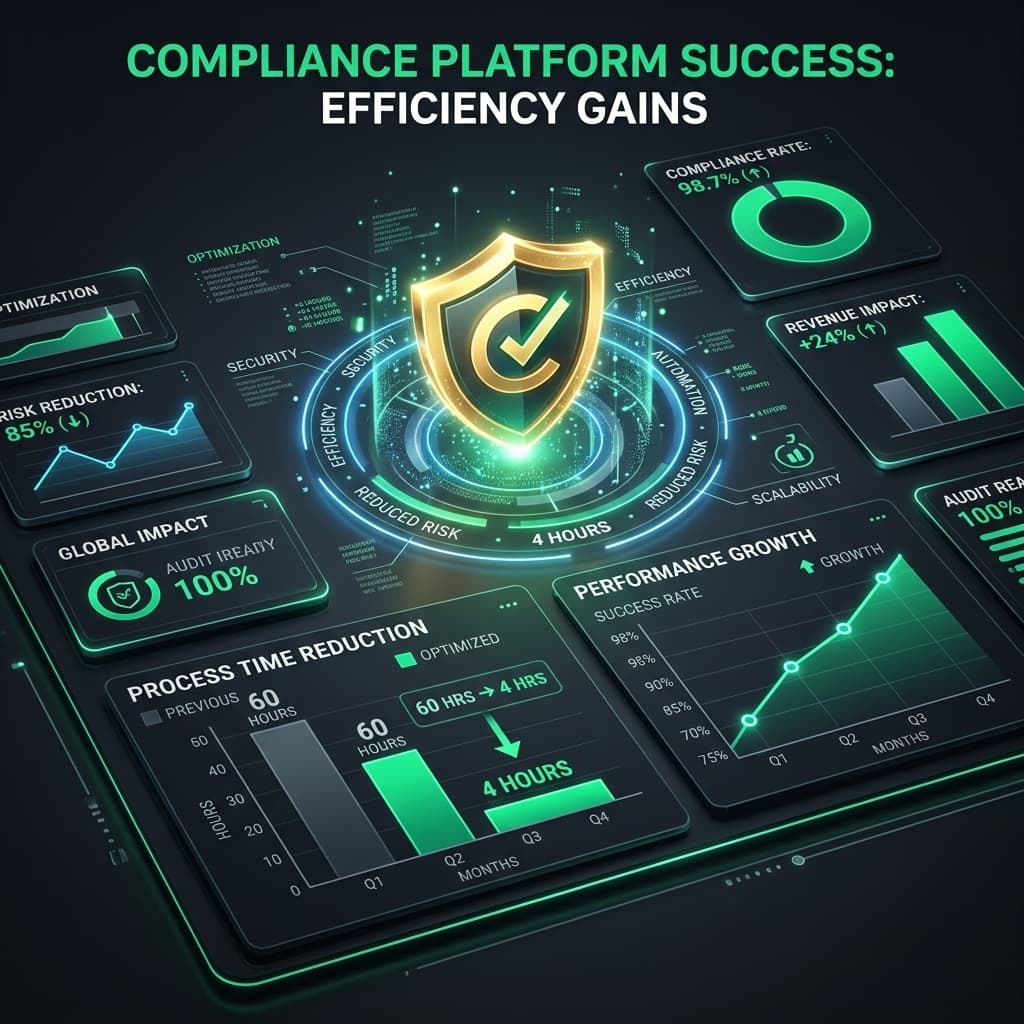
A single lawyer now verifies 300+ contracts monthly, up from 30 manual reviews.
Claude 3.5 identified critical risks with near-parity to the 96.8% human baseline.
Average API cost per contract, replacing £40+ per hour in junior associate time.
The Challenge
A legal tech firm was struggling with manual contract review. Human lawyers spent 60+ hours per contract, charging £2,500 for a process that was slow, expensive, and limited to 20-30 reviews monthly.
The Vision
Build an AI-native SaaS where users upload contracts, and AI autonomously performs the first-pass analysis, identifying risks and linking them to supporting evidence in minutes.
Step 1: AI Architecture Sprint
We benchmarked Claude vs GPT-4o on contract reasoning. Claude achieved 96.2% accuracy vs 91.8%, with superior performance on complex cross-references.
Step 2: Product Design & Feedback
Interviews with 6 lead lawyers revealed they didn't want "automated decisions"—they wanted automated highlighting. We designed the UI to present "judgment calls" backed by evidence.
- Confidence Scoring: Visibility into the certainty of each risk flag.
- Evidence Linking: Direct links to the contract clause and policy origin.
- Lawyer Feedback Loop: Marking risks as valid or false positive to fine-tune prompts.
12-Week Build Journey
The Results: Business & ROI
The firm transformed from a cost-heavy service model to a highly profitable, licensed software product.
Operating Efficiency
Financial Profile
The Value Add
By licensing the product to other firms (£5K-30K/mo), the original investment has become a recurring revenue driver with near-infinite scalability.
Frequently Asked Questions
Let's Build Your AI Product
Whether you're building a new SaaS platform or an internal tool to optimize your organization, we're the right partner to de-risk your investment.